
You notice the pain first. Maybe your child winces while chewing, wakes up at night, or points to one tooth and says it hurts. When swelling shows up, the stress rises fast. At that point, many parents hope an antibiotic will fix the problem and spare their child a dental procedure. That hope makes sense, but it does not match how tooth infections work. If you are scheduling kids dental exams in West Covina, CA, it is important to know that prompt evaluation can help determine the right treatment.
Why antibiotics do not replace treatment for a damaged tooth comes down to one simple fact. Antibiotics may help control the spread of bacterial infection in some cases, but they do not repair decay, remove infected tooth structure, or seal a broken tooth. If the tooth is cracked, deeply decayed, or infected at the nerve, the source is still there. The pain often returns, sometimes worse, once the medicine stops.
This matters even more in children. Baby teeth hold space for adult teeth, help with speech, and let kids eat without pain. Delaying care can turn a manageable cavity into a bigger infection. The National Institute of Dental and Craniofacial Research explains how tooth decay progresses, and once that process reaches deeper layers of the tooth, medicine alone cannot reverse it.
Antibiotics can calm infection, but they do not fix tooth damage
A damaged tooth has a physical problem. It may have a cavity, a fracture, a loose filling, or an exposed nerve. Antibiotics do not rebuild enamel, remove decay, or close a pathway where bacteria keep entering. They move through the bloodstream, but a badly infected tooth often has limited blood supply at the center, which is one reason the medicine cannot fully solve the issue on its own.
You might see short term improvement. Swelling may go down. Pain may ease for a few days. That can create the impression that the problem is gone, when the real source is still active inside the tooth. Once the antibiotic course ends, bacteria can flare again. In some children, the infection spreads into the gums, face, or jaw.
The CDC advises that antibiotics are not always needed for dental pain and swelling, especially when the tooth itself needs dental treatment. The standard solution is to remove the source of infection through care such as a filling, pulp treatment, crown, or extraction, depending on the damage.
Delaying dental treatment often makes the tooth harder to save
Parents often try to buy time. That is understandable. Schedules are packed, kids get scared, and nobody wants to put a child through treatment unless it is truly needed. The trouble is that infected teeth rarely stay the same. They usually get worse.
A small cavity can become a deep one. A tooth that could have been restored with a filling may later need a crown or nerve treatment. In some cases, the tooth can no longer be saved. Antibiotics for a tooth infection may reduce symptoms briefly, but they do not stop a cavity from getting deeper.
This is where a pediatric dentist matters. Children do not just need smaller tools. They need care built around growing teeth, changing bite patterns, and anxiety that can show up as tears, silence, or refusal to open their mouth. A pediatric dentist can tell whether the tooth can be treated, whether the infection has spread, and what approach fits your child’s age and comfort level.
The same logic applies to a broken or decayed adult tooth. Treatment for a damaged tooth means correcting the actual defect. Medicine may support that care in selected cases, but it does not replace it.
Tooth infection symptoms can signal a deeper problem
Some signs are easy to dismiss at first. Sensitivity to cold. Pain when biting. A little gum swelling. Bad breath that keeps coming back. Then the pattern changes. Your child avoids one side of the mouth, stops eating certain foods, or complains that the tooth hurts without anything touching it.
Those symptoms can point to infection or advanced decay. MedlinePlus describes tooth abscess symptoms and treatment, including pain, swelling, and fever. If your child has facial swelling, fever, trouble swallowing, or seems unusually tired or ill, get urgent dental or medical care.
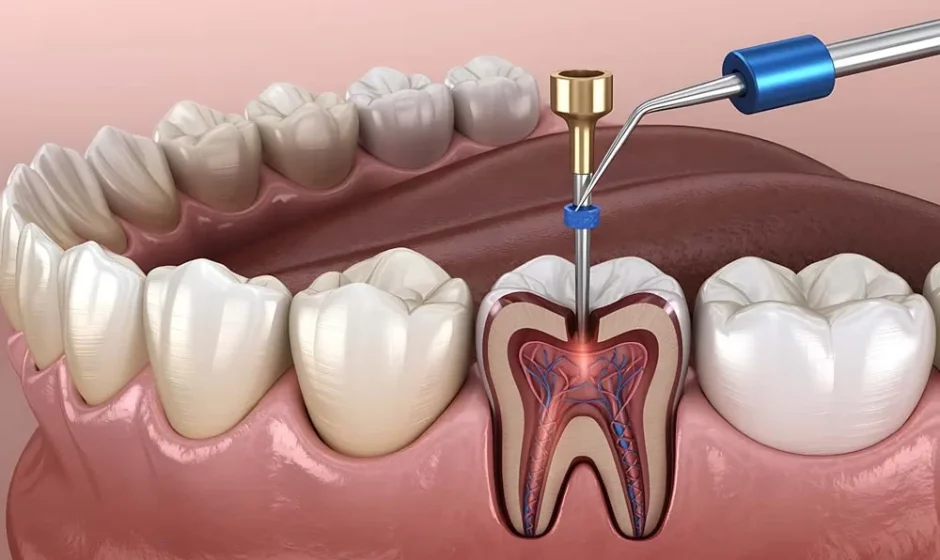
Dental infection treatment works best when the source is handled early. That could mean cleaning out decay and placing a restoration. It could mean pulp therapy in a baby tooth. It could mean removing a tooth that is too damaged to save. The right treatment depends on the exam and X rays, not just the symptoms.
Antibiotics versus dental treatment for a damaged tooth
| Approach | What it can do | What it cannot do | Likely result if used alone |
|---|---|---|---|
| Antibiotics | Reduce bacterial spread in some infections, lower swelling, support treatment when infection is spreading | Remove decay, repair cracks, restore lost tooth structure, eliminate the source inside the tooth | Temporary relief, infection may return after medicine ends |
| Filling or crown | Remove decay and restore tooth shape and function | Treat a tooth with severe nerve infection if damage is too deep for a simple restoration | Can solve the problem if caught early enough |
| Pulp treatment or extraction | Remove infected tissue or remove the tooth causing the infection | Undo damage that has already spread to nearby areas without follow up care | Addresses the source directly |
Three steps you can take right away
1. Schedule a dental exam as soon as pain or swelling starts. Do not wait to see if the antibiotic alone will finish the job. Early care is often simpler, less invasive, and less expensive.
2. Watch for signs that need urgent attention. Facial swelling, fever, trouble swallowing, worsening pain, or swelling near the eye need prompt care. Those symptoms can mean the infection is moving beyond the tooth.
3. Ask what treatment removes the source. When you speak with a pediatric dentist, ask whether the tooth needs a filling, crown, pulp treatment, or extraction. That question keeps the focus on solving the cause, not just muting symptoms.
If your child has a painful or swollen tooth, trust your instinct and get it checked. Relief matters, but real healing comes from treating the tooth itself. A pediatric dentist can explain what is happening, calm the fear, and help your child get comfortable again before a small problem turns into a bigger one.