
You might be feeling stuck between two hard choices right now. You know you need to replace a missing or failing tooth, you have probably been told that a dental implant is the most stable option, yet your oral surgeon or dentist in Tempe, AZ mentioned that your jawbone is “too thin” or “too soft” and that you may need a bone graft first.end
It is normal to feel worried when you hear words like “graft” or “surgery.” You might picture long recoveries, painful procedures, and bills that keep you up at night. At the same time, you probably miss being able to chew comfortably or smile without thinking about that gap. Because of this tension, you might wonder if the extra step of bone grafting is really worth it, or if it is just one more hurdle.
Here is the short version. Bone grafting is often the quiet, behind the scenes step that allows a dental implant to work the way it should. When the jawbone has shrunk or weakened, a graft rebuilds enough bone so the implant can anchor securely and last. It adds time to the process, yet it usually improves comfort, appearance, and long term success. Once you understand why it is recommended and what to expect, the whole path from missing tooth to stable implant feels far less intimidating.
Why is bone grafting even necessary before a dental implant?
To understand why your oral surgeon is talking about bone grafting, it helps to picture how an implant actually works. A dental implant is like an artificial tooth root that is placed in your jaw. According to the Mayo Clinic’s overview of dental implant surgery, the surrounding bone needs to grow tightly around that implant so it can handle biting and chewing forces.
Here is the problem. When a tooth is lost, the jawbone in that area no longer gets the daily pressure from chewing. The body reads that as “this bone is not needed” and slowly absorbs it. After months or years, the ridge of bone can become low or narrow. Gum disease, trauma, or long term denture wear can also thin the bone. So when the time comes to place an implant, there simply is not enough bone to hold it securely.
You might hear your surgeon talk about terms like “insufficient bone height” or “loss of bone width.” Underneath that technical language is a simple truth. Without enough healthy bone, an implant is more likely to fail, loosen, or look unnatural. That is where bone grafting for dental implants comes in. It creates a stronger foundation so your implant has something solid to hold on to.
What actually happens during bone grafting, and how does it feel?
Once you know the why, the next worry is usually the how. You may imagine bone being taken from your hip or a long hospital stay. In reality, most dental bone grafts are smaller, outpatient procedures done by an oral surgeon or implant dentist, often with local anesthesia and optional sedation.
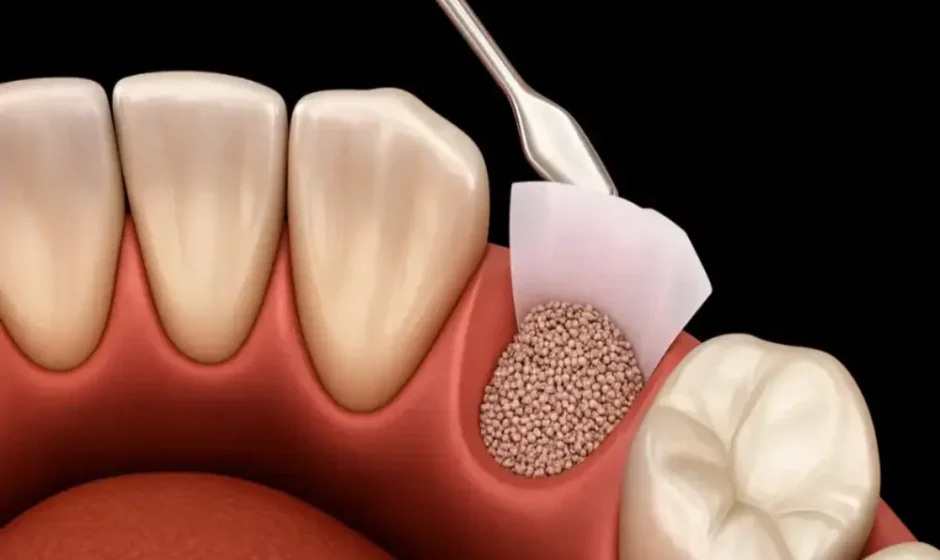
In many cases, the graft material is processed bone from a donor or an animal source, or a synthetic material. It is shaped and gently packed into the area where your jawbone has shrunk. A small membrane or covering may be placed, and the gum is stitched closed over the site. Over the next few months, your own body does the real work. New bone cells grow into and around the graft, gradually turning it into living bone. MedlinePlus explains this natural healing process in its discussion of bone grafts and how they fuse with existing bone.
So where does that leave you in terms of comfort and daily life. After surgery, people usually report soreness, swelling, and a feeling of fullness or pressure rather than sharp pain. These symptoms can often be managed with cold packs and prescribed or over the counter pain medicine. You might need to avoid chewing on that side, skip hard or crunchy foods, and follow instructions about rinsing and oral hygiene. Most people are back to regular routines within a few days, while the bone itself continues to heal quietly underneath.
The trade off is time. The graft usually needs several months to mature before an implant can be placed. That delay can feel frustrating if you are eager to move straight to your new tooth. Yet your surgeon is playing the long game. A strong, well healed graft supports a more stable implant and reduces the chance of needing to redo the work later.
How do the risks and benefits of bone grafting compare to skipping it?
When you are weighing whether to agree to bone grafting, it can help to see the bigger picture. What are you really choosing between. The table below lays out some common differences between going ahead with a graft versus trying to place an implant in weak bone or relying on a removable option instead.
| Question | With Bone Grafting + Implant | Without Graft / Removable Option |
|---|---|---|
| How stable will my tooth feel when I chew | High stability. Implant anchored in rebuilt bone. Often feels close to a natural tooth. | Lower stability. Removable dentures or partials can move. Implants in weak bone may loosen. |
| What about long term bone health | Helps maintain jawbone height and shape. Chewing on the implant stimulates bone. | Jawbone often continues to shrink under gaps or dentures, which can change facial shape over time. |
| How long does treatment take | Longer. Graft healing typically adds several months before implant placement. | Shorter at first. However, more adjustments or remakes of dentures may be needed over time. |
| Upfront vs long term cost | Higher upfront cost due to graft and implant surgery, but fewer replacements if it succeeds. | Lower upfront cost for removable options, but higher maintenance and possible future bone loss issues. |
| Everyday comfort and confidence | Usually greater comfort. No need to remove a tooth at night. More confidence when speaking and eating. | Some people adapt well, others stay self conscious about movement, clicking, or removal. |
There is no one answer that fits everyone. Your medical history, overall health, and budget all matter. What is important is that you understand that preparing the jaw with bone grafting for implant surgery is not “extra” or cosmetic. It is often the step that separates a short lived fix from a long lasting solution.
What can you do right now to move forward with clarity?
When you are already tired of dental problems, the last thing you need is more confusion. A few focused steps can give you a clearer path and a bit more peace of mind.
1. Ask your oral surgeon to show you your bone loss visually
Do not be afraid to request to see your X rays or 3D scan on the screen. Ask where the bone is thin, how much is missing, and how that affects implant options. Seeing the problem often makes the solution feel more logical and less mysterious. You can also ask how your case compares to “typical” patients, so you understand whether your situation is mild, moderate, or advanced.
2. Clarify your graft and implant timeline in writing
Bone grafting and implant placement can happen in stages. Sometimes a small graft is placed at the same time as the implant. Other times, the graft must heal first. Ask your provider to outline the steps, estimated healing times, and when you can expect to have a final crown or tooth in place. Having a simple written timeline can reduce anxiety and make it easier to plan work, travel, and family obligations.
3. Talk openly about costs, insurance, and payment options
Financial stress can quietly amplify every medical decision. Ask the office to break down the costs of the graft, the implant, and the final restoration separately. Confirm what your insurance might cover and what it will not. Some people choose to stage treatment to spread costs over time. Others compare the long term cost of implants to repeated denture remakes. When you have real numbers, the decision feels less like a guess and more like a choice.
Finding confidence in your decision about bone grafting and implants
You are not wrong to feel cautious. You are weighing surgery, money, time, and your ability to eat and smile comfortably for years to come. That is a lot to hold. At the same time, modern oral surgery and implant dentistry is designed to support you through exactly this kind of situation. Bone grafting exists so that people who have lost bone are not automatically excluded from the benefits of a stable implant.
If you keep the core idea in mind that how bone grafting prepares patients for dental implants is by rebuilding a safe, solid foundation, many of the details begin to make sense. You are not being “over treated.” You are being given a chance to restore what time, infection, or trauma has taken from your jaw.
You deserve clear explanations, honest answers, and a plan that respects your health and your life. Use that as your standard when you speak with your oral surgeon or implant dentist. Ask questions until you can picture the path in front of you. Once you can see it, each step, including bone grafting, often feels far more manageable.